

Reminder: Voting and Book Discussion
Sep. 23rd, 2026 06:45 pm![[personal profile]](https://www.dreamwidth.org/img/silk/identity/user.png) seleneheart posting in
seleneheart posting in ![[community profile]](https://www.dreamwidth.org/img/silk/identity/community.png) bookclub_dw
bookclub_dwAs a reminder, vamp_ress is hosting a vampire-themed October book - please go vote for your choice here: https://bookclub-dw.dreamwidth.org/9288.html
I will post the discussion for This Is How You Lose the Time War on September 30. Looking forward to talking about this one!!
vamp_ress is hosting a vampire-themed October book - please go vote for your choice here: https://bookclub-dw.dreamwidth.org/9288.htmlI will post the discussion for This Is How You Lose the Time War on September 30. Looking forward to talking about this one!!
Fall Horror Reads
Sep. 20th, 2026 04:07 pmrocky41_7Stealing an idea from susieboo to share some spooky/horror-themed reads for Halloween season! ( ⓛ ω ⓛ *)
Affinity by Sarah Waters
An upper-class woman recovering from a suicide attempt, Margaret Prior has begun visiting the women’s ward of Millbank prison, Victorian London’s grimmest jail, as part of her rehabilitative charity work. Amongst Millbank’s murderers and common thieves, Margaret finds herself increasingly fascinated by on apparently innocent inmate, the enigmatic spiritualist Selina Dawes. Selina was imprisoned after a séance she was conducting went horribly awry, leaving an elderly matron dead and a young woman deeply disturbed. Although initially skeptical of Selina’s gifts, Margaret is soon drawn into a twilight world of ghosts and shadows, unruly spirits and unseemly passions, until she is at last driven to concoct a desperate plot to secure Selina’s freedom, and her own.
Key notes: Romance, atmospheric, gothic, ghosts, questioning reality
Cuckoo by Gretchen Felker-Martin
Something evil is buried deep in the desert. It wants your body. It wears your skin.
In the summer of 1995, seven queer kids abandoned by their parents at a remote conversion camp came face to face with it. They survived—but at Camp Resolution, everybody leaves a different person.
Sixteen years later, only the scarred and broken survivors of that terrible summer can put an end to the horror before it's too late.
Key notes: Psychological torture, there's an actual monster, the lasting impact of trauma, the monster is an allegory
A Dowry of Blood by S.T. Gibson
Saved from the brink of death by a mysterious stranger, Constanta is transformed from a medieval peasant into a bride fit for an undying king. But when Dracula draws a cunning aristocrat and a starving artist into his web of passion and deceit, Constanta realizes that her beloved is capable of terrible things. Finding comfort in the arms of her rival consorts, she begins to unravel their husband's dark secrets.
Key notes: Vampires, romance, abusive relationships
The Echo Wife by Sarah Gailey
Martine is a genetically cloned replica made from Evelyn Caldwell’s award-winning research. She’s patient and gentle and obedient. She’s everything Evelyn swore she’d never be.
Mexican Gothic by Silvia Moreno-Garcia
After receiving a frantic letter from her newly-wed cousin begging for someone to save her from a mysterious doom, Noemí Taboada heads to High Place, a distant house in the Mexican countryside. She’s not sure what she will find—her cousin’s husband, a handsome Englishman, is a stranger, and Noemí knows little about the region.
Noemí is an unlikely rescuer: She’s a glamorous debutante, and her chic gowns and perfect red lipstick are more suited for cocktail parties than amateur sleuthing. But she’s also tough and smart, with an indomitable will, and she is not afraid: Not of her cousin’s new husband, who is both menacing and alluring; not of his father, the ancient patriarch who seems to be fascinated by Noemí; and not even of the house itself, which begins to invade Noemi’s dreams with visions of blood and doom.
Key notes: Gothic, family drama, a vague and creeping sense of horror, there is a curse but there's also plain racism
Our Share of Night by Mariana Enriquez
A young father and son set out on a road trip, devastated by the death of the wife and mother they both loved. United in grief, the pair travel to her ancestral home, where they must confront the terrifying legacy she has bequeathed: a family called the Order that commits unspeakable acts in search of immortality.
For Gaspar, the son, this maniacal cult is his destiny. As the Order tries to pull him into their evil, he and his father take flight, attempting to outrun a powerful clan that will do anything to ensure its own survival. But how far will Gaspar’s father go to protect his child? And can anyone escape their fate?
Key notes: Family drama, generational curse, slow build, cult/cult abuse
The Unworthy by Agustina Bazterrica
In the House of the Sacred Sisterhood, the unworthy live in fear of the Superior Sister's whip. Seething with resentment, they plot against each other and await who will ascend to the level of the Enlightened - and who will suffer the next exemplary punishment. Risking her life, one of the unworthy keeps a diary in secret. Slowly, memories surface from a time before the world collapsed, before the Sacred Sisterhood became the only refuge. Then Lucía arrives. She, too, is unworthy - but she is different. And her arrival brings a single spark of hope to a world of darkness.
Key notes: Cult/cult abuse, post-apocalyptic, body horror, people are the real monsters
susieboo to share some spooky/horror-themed reads for Halloween season! ( ⓛ ω ⓛ *)Affinity by Sarah Waters
An upper-class woman recovering from a suicide attempt, Margaret Prior has begun visiting the women’s ward of Millbank prison, Victorian London’s grimmest jail, as part of her rehabilitative charity work. Amongst Millbank’s murderers and common thieves, Margaret finds herself increasingly fascinated by on apparently innocent inmate, the enigmatic spiritualist Selina Dawes. Selina was imprisoned after a séance she was conducting went horribly awry, leaving an elderly matron dead and a young woman deeply disturbed. Although initially skeptical of Selina’s gifts, Margaret is soon drawn into a twilight world of ghosts and shadows, unruly spirits and unseemly passions, until she is at last driven to concoct a desperate plot to secure Selina’s freedom, and her own.
Key notes: Romance, atmospheric, gothic, ghosts, questioning reality
Cuckoo by Gretchen Felker-Martin
Something evil is buried deep in the desert. It wants your body. It wears your skin.
In the summer of 1995, seven queer kids abandoned by their parents at a remote conversion camp came face to face with it. They survived—but at Camp Resolution, everybody leaves a different person.
Sixteen years later, only the scarred and broken survivors of that terrible summer can put an end to the horror before it's too late.
Key notes: Psychological torture, there's an actual monster, the lasting impact of trauma, the monster is an allegory
A Dowry of Blood by S.T. Gibson
Saved from the brink of death by a mysterious stranger, Constanta is transformed from a medieval peasant into a bride fit for an undying king. But when Dracula draws a cunning aristocrat and a starving artist into his web of passion and deceit, Constanta realizes that her beloved is capable of terrible things. Finding comfort in the arms of her rival consorts, she begins to unravel their husband's dark secrets.
Key notes: Vampires, romance, abusive relationships
The Echo Wife by Sarah Gailey
Martine is a genetically cloned replica made from Evelyn Caldwell’s award-winning research. She’s patient and gentle and obedient. She’s everything Evelyn swore she’d never be.
And she’s having an affair with Evelyn’s husband.
Now, the cheating bastard is dead, and both Caldwell wives have a mess to clean up.
Good thing Evelyn Caldwell is used to getting her hands dirty.
Key notes: Murder, conspiracy, human experimentation, people are the real monstersMexican Gothic by Silvia Moreno-Garcia
After receiving a frantic letter from her newly-wed cousin begging for someone to save her from a mysterious doom, Noemí Taboada heads to High Place, a distant house in the Mexican countryside. She’s not sure what she will find—her cousin’s husband, a handsome Englishman, is a stranger, and Noemí knows little about the region.
Noemí is an unlikely rescuer: She’s a glamorous debutante, and her chic gowns and perfect red lipstick are more suited for cocktail parties than amateur sleuthing. But she’s also tough and smart, with an indomitable will, and she is not afraid: Not of her cousin’s new husband, who is both menacing and alluring; not of his father, the ancient patriarch who seems to be fascinated by Noemí; and not even of the house itself, which begins to invade Noemi’s dreams with visions of blood and doom.
Key notes: Gothic, family drama, a vague and creeping sense of horror, there is a curse but there's also plain racism
Our Share of Night by Mariana Enriquez
A young father and son set out on a road trip, devastated by the death of the wife and mother they both loved. United in grief, the pair travel to her ancestral home, where they must confront the terrifying legacy she has bequeathed: a family called the Order that commits unspeakable acts in search of immortality.
For Gaspar, the son, this maniacal cult is his destiny. As the Order tries to pull him into their evil, he and his father take flight, attempting to outrun a powerful clan that will do anything to ensure its own survival. But how far will Gaspar’s father go to protect his child? And can anyone escape their fate?
Key notes: Family drama, generational curse, slow build, cult/cult abuse
The Unworthy by Agustina Bazterrica
In the House of the Sacred Sisterhood, the unworthy live in fear of the Superior Sister's whip. Seething with resentment, they plot against each other and await who will ascend to the level of the Enlightened - and who will suffer the next exemplary punishment. Risking her life, one of the unworthy keeps a diary in secret. Slowly, memories surface from a time before the world collapsed, before the Sacred Sisterhood became the only refuge. Then Lucía arrives. She, too, is unworthy - but she is different. And her arrival brings a single spark of hope to a world of darkness.
Key notes: Cult/cult abuse, post-apocalyptic, body horror, people are the real monsters
Book review: The Space Between Worlds
Sep. 20th, 2026 09:25 amrocky41_7 posting in booknookTitle: The Space Between Worlds
Author: Micaiah Johnson
Genre: Sci-fi/fantasy, fiction
Author: Micaiah Johnson
Genre: Sci-fi/fantasy, fiction
Earlier this week, with 22 minutes left on my Libby check-out, I finished The Space Between Worlds by Micaiah Johnson. This is an SFF book about Caramenta, a young woman who travels to different parallel universes to gather information on their development for her employer, the tech company Eldridge.
In Cara’s world, and many like it, environmental disasters have wreaked havoc on Earth. The population is divided among people who live in domed, climate-controlled cities, and those left to the wasteland. The trick about world-hopping is that you can’t go to a parallel universe where “you” are still alive—so suddenly wastelanders like Cara, who have died over and over again by virtue of their terrible living circumstances, become valuable to Eldridge. Cara is particularly special, because in 325 parallel Earths which Eldridge has reached, she is dead in all but eight of them.
There is a lot of playing with what becomes of people if their circumstances are changed—Cara is especially interested in tracking one parallel version of herself who was adopted into a city family at a young age and how radically different her life is from the other Caras as a result.
The Space Between Worlds is pretty light on the SFF, actually. The world-hopping is really secondary to the issues of race and class that the book focuses on. I enjoyed Cara as a protagonist; she’s self-serving in a way that makes perfect sense given how hard she’s had to fight just to survive, but not cold-hearted. There are moments when you can see how much she wants to be different, softer, kinder, but she doesn’t trust the world not to punch her in the solar plexus if she tries.
She has a struggling romance with Dell, a female coworker born and raised in the city, and it’s tragic watching how the aforementioned race and class issues throw up roadblocks between them. I thought Johnson was occasionally a bit heavy-handed on the subject of Cara’s yearning for Dell, but on the whole this aspect was fun to watch play out.
The book was engaging all the way through and I always wanted to see how things turned out, but I’m not totally sold on the later third or so of the plot. I can’t decide if the ending was anticlimactic or just realistic. I did like the book, but something about the final big plot point just didn’t fully land for me.
Overall, a fun read.
Recent Reading: The Space Between Worlds
Sep. 20th, 2026 09:24 amrocky41_7Earlier this week, with 22 minutes left on my Libby check-out, I finished The Space Between Worlds by Micaiah Johnson. This is an SFF book about Caramenta, a young woman who travels to different parallel universes to gather information on their development for her employer, the tech company Eldridge.
In Cara’s world, and many like it, environmental disasters have wreaked havoc on Earth. The population is divided among people who live in domed, climate-controlled cities, and those left to the wasteland. The trick about world-hopping is that you can’t go to a parallel universe where “you” are still alive—so suddenly wastelanders like Cara, who have died over and over again by virtue of their terrible living circumstances, become valuable to Eldridge. Cara is particularly special, because in 325 parallel Earths which Eldridge has reached, she is dead in all but eight of them.
There is a lot of playing with what becomes of people if their circumstances are changed—Cara is especially interested in tracking one parallel version of herself who was adopted into a city family at a young age and how radically different her life is from the other Caras as a result.
The Space Between Worlds is pretty light on the SFF, actually. The world-hopping is really secondary to the issues of race and class that the book focuses on. I enjoyed Cara as a protagonist; she’s self-serving in a way that makes perfect sense given how hard she’s had to fight just to survive, but not cold-hearted. There are moments when you can see how much she wants to be different, softer, kinder, but she doesn’t trust the world not to punch her in the solar plexus if she tries.
She has a struggling romance with Dell, a female coworker born and raised in the city, and it’s tragic watching how the aforementioned race and class issues throw up roadblocks between them. I thought Johnson was occasionally a bit heavy-handed on the subject of Cara’s yearning for Dell, but on the whole this aspect was fun to watch play out.
The book was engaging all the way through and I always wanted to see how things turned out, but I’m not totally sold on the later third or so of the plot. I can’t decide if the ending was anticlimactic or just realistic. I did like the book, but something about the final big plot point just didn’t fully land for me.
Overall, a fun read.
Bat Eater and Other Names for Cora Zeng
Sep. 19th, 2026 05:49 pmcornerofmadness posting in bookheaven Bat Eater and Other Names for Cora Zeng by Kylie Lee Baker
My rating: 3 of 5 stars
Honestly it's a 2 star read for me but I gave it one more for the side characters and the Chinese lore but in full disclosure if it wasn't for this being my book club read I would have DNFed it in a heart beat. It starts out great, sets the Covid era scene well and establishes the dynamic of Cora and her half sister Delilah who dies horrifically. Even Cora's job as a crime scene cleaner is unusual and intriguing. I think part of my issue with this is the hype which a) set up the spookiness b) made it sound like a murder mystery/horror. I suppose it kind of is but the book forgets that for half of it.
Cora is the most uninteresting character I've read in a long time. She refers to herself as an echo of her sister and she really is. If I had a drink for every time she talks about having no dreams, no ambition, how she's never listened to or wanted anything, how she's a nothing, I'd die of alcohol poisoning. There's inferiority complexes (and her upbringing would give you one) and then there is this. Cora has zero agency of her own nor does she want any which was a huge issue for me. If not for her friends/co-workers Harvey and Yifei, the hungry ghost would have killed her in the first act and I would have been rooting it on. This bland protagonist zombie shuffles through life and I was reminded of a piece of writing advice I saw recently 'one bit of trauma or quirk' does not a personality make. Cora's whole personality is her germaphobia and how she does what every anyone tells her to do because thinking for herself seems to be too hard.
I nearly DNFed until the incident in the Catholic church (Cora is stuck between her white Catholic Aunt Lois and her Chinese Aunt Zeng who dispenses all the Chinese culture bits about Hungry Ghosts along with Yifei. At least that was interesting and it got a bit better. However, this starts out with the bats appearing at all the crime scenes so Yifei, Cora and Harvey think it's a serial killer and Yifei (not Cora) tries to get law enforcement involved.
And then that is forgotten until the last couple of chapters. The Hungry Ghost of Cora's sister is intriguing and how Yifei, Harvey and Auntie Zeng try to go about stopping it as Cora drifts along in their wake. And then the book takes a hard left, remembers the bats and the deaths and we get a weird ending, where Cora finally does something on her own (not a good something either) and the whole mystery solution is rather lame. The other thing that bothered me other than I was supposed to be rooting for a character with no agency is how in NYC, every person they see (outside of our Asian trio and Auntie Zeng) are white. Not a brown person to be seen. And every last single one of them is as racist as hell.
I am not denying in the least that there was a huge uptick in anti-Asian violence during Covid. There absolutely was. But literally every white person they meet in this calls them names, spits on them etc. I noticed even other Asian American reviewers of this book commenting about it. Also we're meant to believe that there were hundreds of murdered Asians during the first year of Covid in the city (not just the few the trio cleaned up after). Did you know NYC has their murder stats online by race? Now you do. There were only about a dozen (which is enough). I went looking not so much to prove her wrong (I mean this is fiction and the author is clearly working through her own trauma here) but I was curious to know if it was far worse than I thought it was. This book was highly recommended by a lot of horror book bloggers and if you look around I'm in a minority in disliking this but I did dislike Cora so much I'm gun shy about trying other books by Baker even though they sound exactly like something I would like. And thank you to Auntie Zeng, Yifei and Harvey for giving me someone to root for in this. (and looking at the length of this, apparently I'm working through something here too)
View all my reviews
The Mystic and the Missing Girl
Sep. 19th, 2026 05:22 pmcornerofmadness posting in bookheaven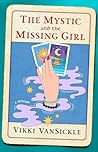 The Mystic and the Missing Girl by Vikki VanSickle
My rating: 4 of 5 stars
I was between 3.5 and 4 so I rounded up. I liked the idea of this but had some notes. Drew is back in her hometown after the death of her Aunt Hannah, a former TV famous psychic and mystic shop owner. Drew's realtor mother expects her to close out the shop so she can sell it for a profit and go back to her life. Drew, on the other hand, is torn. She loved her freewheeling aunt and when she was a child, she had psychic 'glimmers' that her mother highly discouraged.
It is also a major anniversary of the disappearance of a teenaged girl who had gone to the same school as Drew back in the day. Hannah had been helping the police to find the girl but things went awry with lingering bad feelings. Into this comes Nick, her former lab partner/frenemy? who is now a big city reporter trying to break into even bigger leagues with his investigative look into the cold case. He wants her help and her aunt's journals.
In spite of herself, Drew is drawn into the case which also takes her across a former boyfriend, Foster Banks, big name/small town/got money sort of deal. Their fathers work in the same law firm. Luckily, in spite of initial fears (mild spoiler) this doesn't go into love triangle territory.
I liked Nick a lot. And I mostly liked Drew but she was also the reason I was wavering on giving that last star. Drew has a few annoying habits, like she's rather rude more than a few times, notably when Foster calls her out on some of it (she is there manipulating him honestly) and she gets so mad she storms off. She has a habit of disregarding what people are telling her (Like Nick telling her to stop calling him Obi until she forces the truth out of him as to why). I was also not fond of her mother who is demanding and overbearing (though might have improved by the end) and I personally dislike amateur sleuth stories with an adversarial law enforcement officer (this also improves slightly). And oh, while I prefer it this way, the book does have a copy of swears in it which I know upsets a certain segment of the readership.
I would read the next book in the series. Thanks to netgalley and the publisher for giving me an arc.
View all my reviews
[Chat] It's Almost Time!
Sep. 15th, 2026 05:15 pmquillpunk posting in booknookSoon, it's time for the 2026 October Review-A-Thon (sign-ups still ongoing!).
How are we feeling? Have you decided what book(s) you're reviewing? (I have not, orz.) Do you have your review ready or will you be pantsing it on the spot? Any other thoughts? 👀
October 2026 Book Poll
Sep. 15th, 2026 09:23 amseleneheart posting in bookclub_dwPosting on behalf of vamp_ress who is the host for October:
October is the perfect month to do something spooky and (slightly) scary, which is why I’d like to invite you to read a vampire novel with me! (Note: For obvious reasons I’m leaving out trigger warnings for death and blood. I assume everyone is aware that we’ll encounter these in a novel about vampires.)
vamp_ress who is the host for October: October is the perfect month to do something spooky and (slightly) scary, which is why I’d like to invite you to read a vampire novel with me! (Note: For obvious reasons I’m leaving out trigger warnings for death and blood. I assume everyone is aware that we’ll encounter these in a novel about vampires.)
- Anne Rice: Interview with the Vampire, 1976, 346 pages
In a darkened room a young man sits telling the macabre and eerie story of his life - the story of a vampire, gifted with eternal life, cursed with an exquisite craving for human blood. Here are the confessions of a vampire. Hypnotic, shocking, and chillingly erotic, this is a novel of mesmerizing beauty and astonishing force --- a story of danger and flight, of love and loss, of suspense and resolution, and of the extraordinary power of the senses. It is a novel only Anne Rice could write.TW: Slavery, Adult-minor relationship - Grady Hendrix: The Southern Book Club’s Guide to Slaying Vampires, 2020, 424 pages
Patricia Campbell’s life has never felt smaller. Her husband is a workaholic, her teenage kids have their own lives, her senile mother-in-law needs constant care, and she’s always a step behind on her endless to-do list. The only thing keeping her sane is her book club, a close-knit group of Charleston women united by their love of true crime. At these meetings they’re as likely to talk about the Manson family as they are about their own families. One evening after book club, Patricia is viciously attacked by an elderly neighbor, bringing the neighbor's handsome nephew, James Harris, into her life. James is well traveled and well read, and he makes Patricia feel things she hasn’t felt in years. But when children on the other side of town go missing, their deaths written off by local police, Patricia has reason to believe James Harris is more of a Bundy than a Brad Pitt. The real problem? James is a monster of a different kind—and Patricia has already invited him in. Little by little, James will insinuate himself into Patricia’s life and try to take everything she took for granted—including the book club—but she won’t surrender without a fight in this blood-soaked tale of neighborly kindness gone wrong.TW: Racism, Misogyny, Classism, Graphic rape, Domestic violence - Steven Hopstaken & Melissa Prusi: Stoker’s Wilde, 2019, 374 pages
Years before either becomes a literary legend, Bram Stoker and Oscar Wilde must overcome their disdain for one another to battle the Black Bishop, a mysterious madman wielding supernatural forces to bend the British Empire to his will. With the help of a European vampire expert, a spirited actress and an American businessman, our heroes fight werewolves, vampires and the chains of Victorian morality. The fight will take them through dark forests in Ireland, the upper-class London theater world and Stonehenge, where Bram and Oscar must stop a vampire cult from opening the gates of Hell.TW: Gore, Sexual content, Sexual violence
Poll #35076 October 2026 Book
Open to: Registered Users, detailed results viewable to: All, participants: 31
What book should we read in October?
View Answers
Interview with the Vampire
11 (35.5%)
The Southern Book Club’s Guide to Slaying Vampires
13 (41.9%)
Stoker’s Wilde
7 (22.6%)
Book review: Smoke but No Fire
Sep. 13th, 2026 08:53 amrocky41_7 posting in booknookTitle: Smoke but No Fire: Convicting the Innocent of Crimes That Never Happened
Author: Jessica S. Henry
Genre: Nonfiction
Author: Jessica S. Henry
Genre: Nonfiction
On Tuesday after finishing my last book, and with no library holds ready, I dug through our shelves for one I’ve been meaning to get around to, Smoke But No Fire: Convicting the Innocent of Crimes that Never Happened by Jessica S. Henry. I finished this last night.
This is an examination of the phenomenon of a person being convicted of a crime that didn’t happen within the American criminal justice system. Some examples in the book include being charged with arson over a naturally-occurring fire, with drug possession when there were no drugs present, and, bizarrely, with the murder of a child who never existed.
Often, this happens because an incident is initially mislabeled a crime, and everyone just rolls with that. And if there’s a crime, there must be a perpetrator.
If you’ve already studied the criminal justice system, or the legal system more broadly, there’s not much here that’s going to shock. Police with confirmation biases, overworked public defenders, prosecutors desperate to look “tough on crime,” defendants ready to plead guilty to something they didn’t do just to get out of jail pending trial, and judges who are being forced to wear too many hats all contribute to this tragic situation. I do think Henry lays it all out in neat order though, so that even if you knew about these things before, it might be clarifying to see how she puts it together.
I do think it’s something everyone should have at least passing awareness of. Popular media has hammered home that when something feels off, it is off. Humans put enormous stock in our “hunches” and intuition, which, when it comes to other people, are very often wrong. And if you are someone in a position of power—a prosecutor, say—that wrong hunch you’re committed to can cause real harm.
Henry digs into the ways in which even people trained to detect lies rarely bat above a 60% average in correctly guessing when someone is lying. This allows false accusers to be taken seriously while genuine protestations of innocence are ignored—things that could be resolved elsewhere, but once the people working the case become convinced they know the story, it’s very hard to shake them.
She also takes a swing at forensic science, which is tainted by unrealistic claims of accuracy, practitioners who simply make things up, and the failure of judges and juries to understand the real limitations or pitfalls of the various branches (for instance, “bite mark analysis” has been proven to be almost total bunk, but is frequently still admitted in courts; and juries rarely hear about the fallibility of drug-sniffing dogs).
The book can be slightly repetitive, although I did actually appreciate Henry reminding me who a given defendant we’d talked about earlier was, since there are so many of them we hear about in the book. It’s obviously well-researched and Henry, a former public defender, is passionate about the topic and educating the public. Most people are aware that defendants are sometimes convicted of things they didn’t do, but I think there is much less awareness that people can and do plead guilty to things that never even happened, due to the pressures of the system. A guilty plea is perhaps the most damning piece of evidence you can submit to a jury—but it’s not nearly as definitive as we’d like to think.
Recent Reading: Smoke but No Fire
Sep. 13th, 2026 08:52 amrocky41_7On Tuesday after finishing my last book, and with no library holds ready, I dug through our shelves for one I’ve been meaning to get around to, Smoke But No Fire: Convicting the Innocent of Crimes that Never Happened by Jessica S. Henry. I finished this last night.
This is an examination of the phenomenon of a person being convicted of a crime that didn’t happen within the American criminal justice system. Some examples in the book include being charged with arson over a naturally-occurring fire, with drug possession when there were no drugs present, and, bizarrely, with the murder of a child who never existed.
Often, this happens because an incident is initially mislabeled a crime, and everyone just rolls with that. And if there’s a crime, there must be a perpetrator.
If you’ve already studied the criminal justice system, or the legal system more broadly, there’s not much here that’s going to shock. Police with confirmation biases, overworked public defenders, prosecutors desperate to look “tough on crime,” defendants ready to plead guilty to something they didn’t do just to get out of jail pending trial, and judges who are being forced to wear too many hats all contribute to this tragic situation. I do think Henry lays it all out in neat order though, so that even if you knew about these things before, it might be clarifying to see how she puts it together.
I do think it’s something everyone should have at least passing awareness of. Popular media has hammered home that when something feels off, it is off. Humans put enormous stock in our “hunches” and intuition, which, when it comes to other people, are very often wrong. And if you are someone in a position of power—a prosecutor, say—that wrong hunch you’re committed to can cause real harm.
Henry digs into the ways in which even people trained to detect lies rarely bat above a 60% average in correctly guessing when someone is lying. This allows false accusers to be taken seriously while genuine protestations of innocence are ignored—things that could be resolved elsewhere, but once the people working the case become convinced they know the story, it’s very hard to shake them.
She also takes a swing at forensic science, which is tainted by unrealistic claims of accuracy, practitioners who simply make things up, and the failure of judges and juries to understand the real limitations or pitfalls of the various branches (for instance, “bite mark analysis” has been proven to be almost total bunk, but is frequently still admitted in courts; and juries rarely hear about the fallibility of drug-sniffing dogs).
The book can be slightly repetitive, although I did actually appreciate Henry reminding me who a given defendant we’d talked about earlier was, since there are so many of them we hear about in the book. It’s obviously well-researched and Henry, a former public defender, is passionate about the topic and educating the public. Most people are aware that defendants are sometimes convicted of things they didn’t do, but I think there is much less awareness that people can and do plead guilty to things that never even happened, due to the pressures of the system. A guilty plea is perhaps the most damning piece of evidence you can submit to a jury—but it’s not nearly as definitive as we’d like to think.